Veterinary Clinic Setup in Pakistan: How to Open a Pet Clinic Step by Step
Planning a veterinary clinic setup in Pakistan? Get the registrations, equipment list, veterinary pharmacy, business plan and costs, step by step.
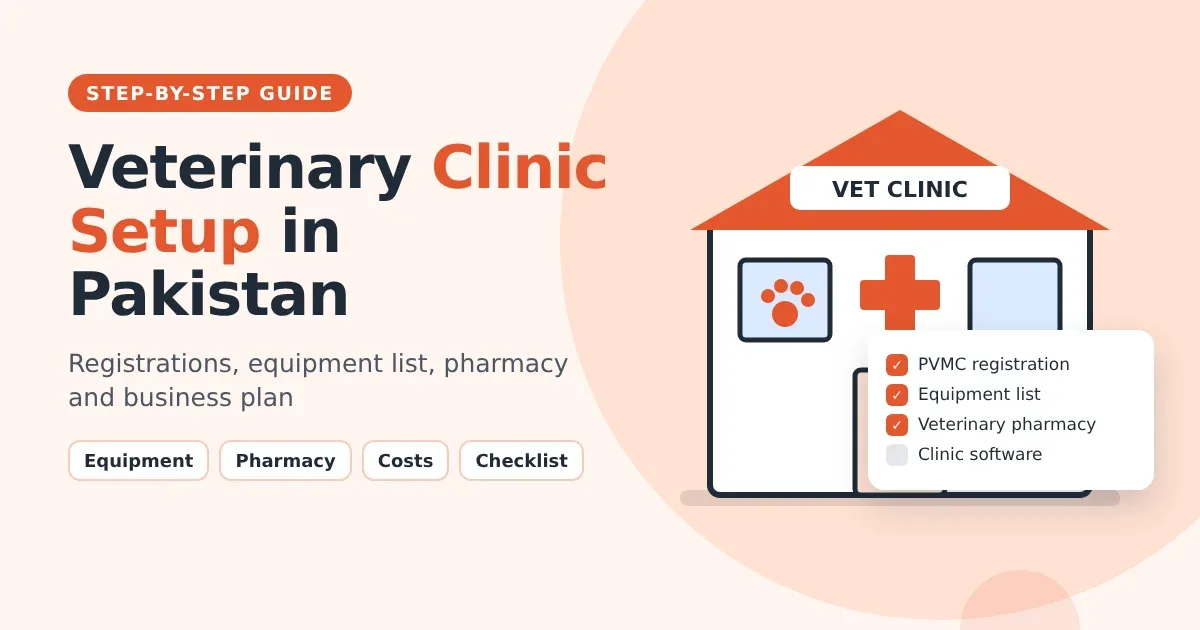
Pet ownership in Pakistan's cities has grown fast, and owners now look for a clean, well-run veterinary clinic close to home. That makes this a good time for a qualified vet to start a practice. This guide covers the full veterinary clinic setup: registrations, location, an equipment list, the veterinary pharmacy, staff, costs and the systems that keep a new pet clinic running smoothly.
How to Open a Vet Clinic in Pakistan: The Short Version
If you want to know how to open a vet clinic in Pakistan, these are the steps in order:
Keep your PVMC registration current.
Write a one-page business plan.
Pick a location and sign the lease.
Complete tax and local registrations.
Buy equipment and set up the pharmacy.
Hire and train a small team.
Set up clinic software.
Open and market the clinic.
Step 1: Professional Registration
A clinic must be run by a qualified veterinarian (DVM) registered with the Pakistan Veterinary Medical Council (PVMC). Display your registration in the clinic, and check the registration of any vet you hire.
Step 2: Write a Vet Clinic Business Plan
A one-page vet clinic business plan is enough to start. Write down:
Your services: consultation, vaccination, surgery, grooming, boarding
The area you will serve and the clinics already there
Your fees and the number of visits a day you need to break even
Monthly costs: rent, salaries, stock, utilities
Where the money will come from, and how long it will last
Step 3: Choose the Location
Look for a ground-floor space on a main road with parking, in an area where many families keep pets. Make sure there is room for a reception, a waiting area, at least one consultation room, the pharmacy and, later, a surgery or ward.
Step 4: Licences and Registrations
Requirements change by province and city, so confirm them with the local office before you sign a lease. Most clinics need:
Business registration and an NTN with FBR
Provincial sales tax on services registration where it applies (for example PRA in Punjab or SRB in Sindh)
Permission or a trade licence from the municipal or cantonment authority
A drug sale licence from the provincial drug authority to sell medicines
Safe disposal arrangements for sharps and clinical waste
Step 5: Veterinary Clinic Equipment List
Use this veterinary clinic equipment list to plan your purchases.
Day-One Essentials
Examination table, weighing scale and good lighting
Stethoscope, thermometers, otoscope and basic diagnostic kits
Vaccine fridge with a thermometer
Autoclave and surgical instruments
Observation cages and a clean waiting area
A computer or tablet and a receipt printer
Add as the Clinic Grows
Ultrasound and digital X-ray
In-house lab analysers (blood count, chemistry)
Anaesthesia machine and monitor
Grooming table and dryer
Step 6: Set Up the Veterinary Pharmacy
A veterinary pharmacy inside the clinic adds steady income and saves owners a second trip. Start with vaccines, dewormers, tick and flea treatments, antibiotics, pain relief and common supplements, plus pet food and accessories. To keep it profitable:
Record batch numbers and expiry dates for every item.
Sell the oldest stock first.
Set low-stock alerts for vaccines and fast-moving medicines.
Link prescriptions to stock so every dispensed item is billed.
Veterinary Clinic Setup Cost in Pakistan
The veterinary clinic setup cost in Pakistan depends mostly on the city, the size of the space and how much equipment you buy at the start. Plan for these heads:
Cost head | What to plan for |
|---|---|
Rent and advance | Usually the biggest upfront cost: deposit plus advance rent |
Renovation | Washable floors and walls, plumbing, lighting, signboard |
Equipment | Day-one essentials first; imaging and lab later |
Pharmacy stock | Vaccines, dewormers, common medicines, pet food |
Salaries | Keep 3 to 6 months in reserve |
Software | A cloud system on a monthly plan avoids a big upfront spend |
Marketing | Google Business Profile, social media, opening offers |
Step 7: Hire a Small Team
A new clinic usually starts with one vet, one para-vet or assistant, and a receptionist who also handles the pharmacy counter. Train everyone on hygiene, safe animal handling and talking to worried owners.
Step 8: Set Up Clinic Software from Day One
Starting on paper and switching later is harder than starting digital. Use veterinary software from the first day to book appointments, keep patient records, run the pharmacy stock, send vaccination reminders and bill in PKR. PMS4Vet lets a single-vet clinic set up the same afternoon. Start your 30-day free trial while you prepare for opening day.
Step 9: Get Your First Clients
Create a Google Business Profile with photos, timings and phone number.
Ask happy clients for reviews.
Run a vaccination or free check-up day in the first month.
Partner with nearby pet shops, groomers and breeders.
Post simple pet care tips on Facebook, Instagram and WhatsApp.
FAQs
Who can open a veterinary clinic in Pakistan?
A qualified veterinarian (DVM) registered with the Pakistan Veterinary Medical Council. An investor can own the business, but a registered vet must do the clinical work.
What equipment do I need for a veterinary clinic setup?
Start with an exam table, scale, stethoscope, thermometers, a vaccine fridge, an autoclave, surgical instruments and observation cages. Add ultrasound, X-ray and lab equipment later.
Do I need a licence to run a veterinary pharmacy?
Yes, selling medicines usually needs a drug sale licence from your provincial drug authority. Confirm the current rules with your local office.
How much does it cost to open a vet clinic in Pakistan?
It depends on the city, the size of the space and the equipment you buy. Rent and advance, renovation and equipment are the biggest costs.
Is a pet clinic profitable in Pakistan?
It can be, especially in cities with high pet ownership. Profit comes from repeat visits such as vaccinations and check-ups, plus pharmacy and pet product sales.
Final Thoughts
A successful clinic starts with the basics done right: a registered vet, a good location, the essential equipment, a well-stocked pharmacy and simple systems from day one. Start small, look after every client, and add services as your clinic grows.